
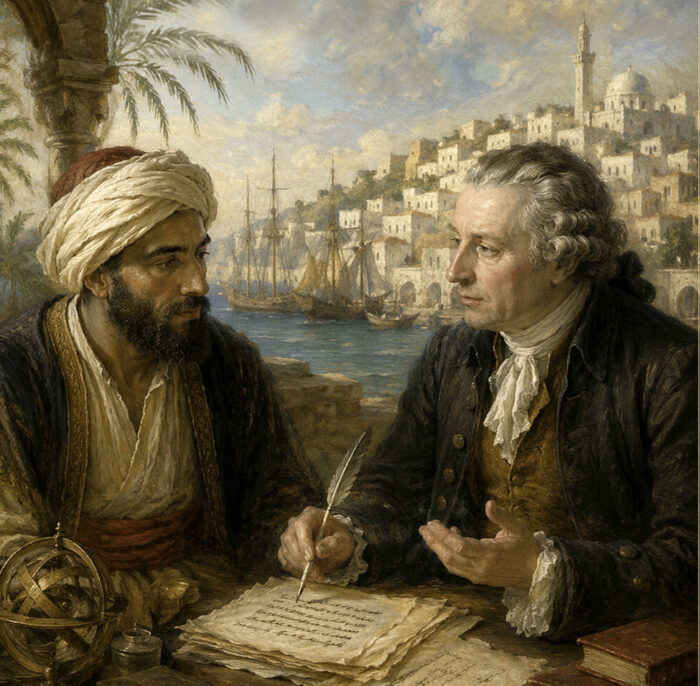
Preliminary Note
The present article constitutes a synthesis of a broader research project conducted by our Brother Histanien, based on the direct study of original sources: early manuscripts and historical editions preserved in accessible heritage collections.
The analyses presented do not stem from a speculative construction, but from a methodical approach grounded in a return to the texts themselves, with careful attention to their historical context and modes of transmission.
This work is of particular interest for the history of eighteenth-century initiatic systems, insofar as it is now established—particularly within the structures documented in the work of Étienne Morin and Henry Andrew Francken, as well as in the manuscripts originating from the Baylot Collection (now incorporated into the Masonic holdings of the Bibliothèque nationale de France), that certain elements of the system developed by Martinès de Pasqually were transmitted, at least in part, within the high Masonic degrees of that period.
In this context, the Manuscript of Algiers should be understood not as an isolated text, but as an operative document belonging to an initiatic continuum that remained largely unified at that time.
A Key to Understanding the Inner Path according to Martinès de Pasqually
Among the texts that have passed down through the history of the Order of the Élus Coëns and have nourished the initiatic tradition stemming from Martinès de Pasqually, the Manuscript of Algiers occupies a singular place.
It is neither a systematic treatise nor a doctrinal work in the classical sense. It is presented rather as a set of instructions, recommendations, and warnings addressed to operators engaged in a demanding spiritual work.
Written at a moment of transition (as Martinès was leaving Europe for the West Indies around 1772–1773), this text bears witness to a thought in action, oriented as much toward inner practice as toward ritual operation. It does not propose an abstract theory, but a discipline of transformation.
Some modern readers have seen in this manuscript a simple theurgical document. Others, on the contrary, have recognized in it an essential stage of inner preparation, prior to any authentic spiritual action. It is this second reading that we wish to explore here: the one that sees in the Manuscript of Algiers not merely a text of instructions, but a true pedagogy of being.
By convention, the name “Manuscript of Algiers” designates a collection of texts preserved and transmitted within the circle of disciples of Martinès de Pasqually.
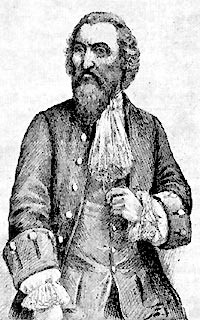
(The Devil in the Nineteenth Century, or The Mysteries of Spiritism – 1893)
Martinès de Pasqually and the Order of the Élus Coëns
To understand the significance of the Manuscript of Algiers, one must first situate the figure of Martinès de Pasqually, founder in the eighteenth century of the Order of the Knight Masons Elect Priests of the Universe. A figure of partially obscure identity, probably of Iberian origin and possibly emerging from Judeo-Christian or converso backgrounds, Martinès appears in French lodges around the middle of the Age of Enlightenment, at a time when Freemasonry was experiencing rapid expansion and a great diversity of forms.
The Order he founded was not limited to an ordinary Masonic structure. It proposed a demanding spiritual path, centered on a particular doctrine: that of the reintegration of man into his original state, that is, the return to a lost harmony between man, the world, and the divine principle. To achieve this reintegration, the Élus Coëns practiced an inner and ritual discipline known as theurgy, not as a search for powers, but as a conscious cooperation with the spiritual order. The Manuscript of Algiers is situated precisely within this context: that of a teaching intended for operators already engaged in this path.
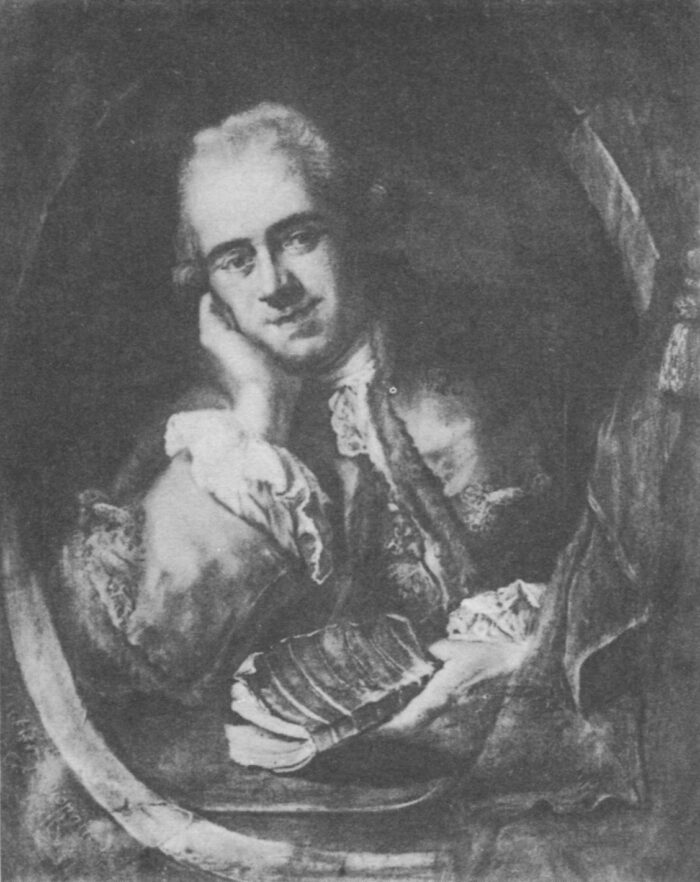
A Lasting Influence: Willermoz, Saint-Martin, and the Legacy of Martinès
The death of Martinès de Pasqually, which occurred in 1774 in Saint-Domingue, did not bring an end to his work. On the contrary, it opened a phase of transmission and transformation. Two of his disciples played a decisive role in this continuity: Jean-Baptiste Willermoz, in Lyon, and Louis-Claude de Saint-Martin, whom history would remember under the name of the “Unknown Philosopher.” Both received the teaching of Martinès, but each interpreted it according to his own sensibility.
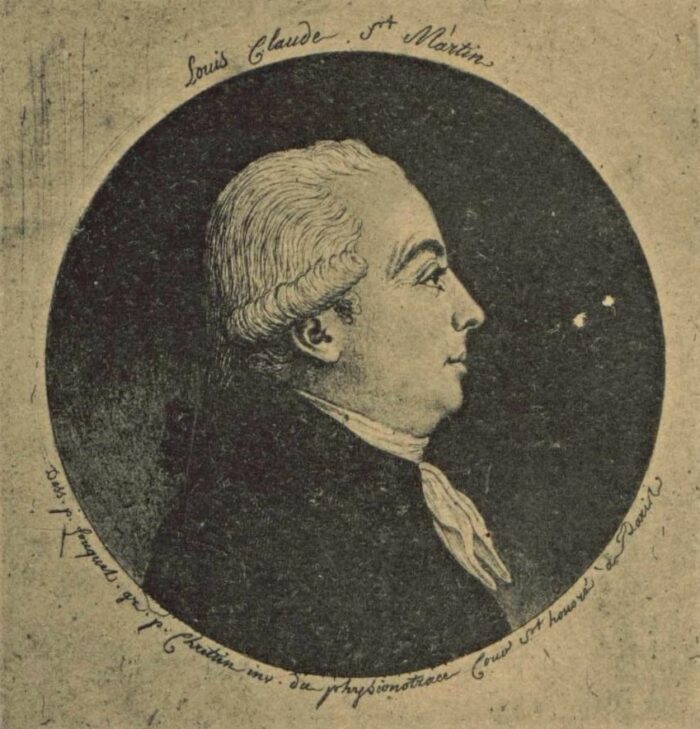
Willermoz sought to preserve the initiatic structure of the Order by integrating it into a stable Masonic form, giving rise to the Rectified Scottish Rite. Saint-Martin, for his part, gradually shifted the emphasis toward a more interior path, centered on the transformation of the heart and inner prayer. This dual orientation—institutional in Willermoz, interior in Saint-Martin—bears witness to the richness and complexity of Martinès’ legacy. It also explains why his figure remains surrounded by a particular aura, composed at once of respect, mystery, and legend: that of a spiritual master whose presence profoundly marked his contemporaries and whose influence continues to be felt within many initiatic traditions.
Multiple filiations within an initiatic continuum
In the nineteenth century, the legacy of Martinès de Pasqually and Louis-Claude de Saint-Martin was not transmitted along a single line. It gave rise to several filiations, some of which developed outside France, within closely interconnected Masonic and initiatic circles.
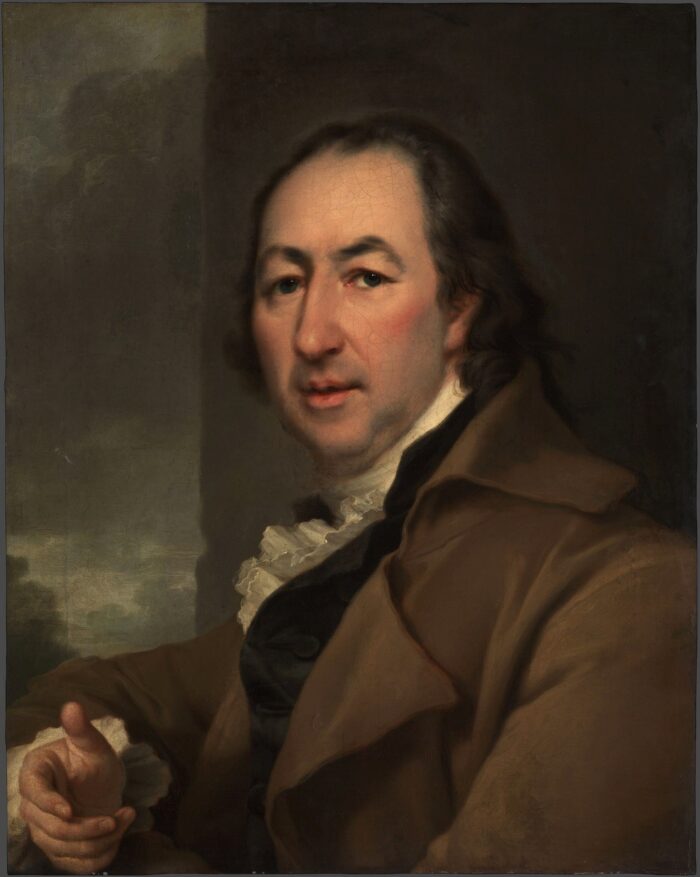
Among these transmissions, the Russian lineage occupies a particular place. From the late eighteenth century onward, figures such as Nikolai Novikov helped to disseminate the spiritual writings and ideas stemming from this legacy, within circles where Freemasonry, the practice of the high degrees, and spiritual inquiry still formed a largely unified whole.
At the end of the nineteenth century, another form of structuring emerged in France through the work of Papus and his collaborators. This movement did not seek to reconstitute the Order of the Élus Coëns in its original form, but rather to transmit certain aspects of its spiritual inspiration within a framework adapted to its time.
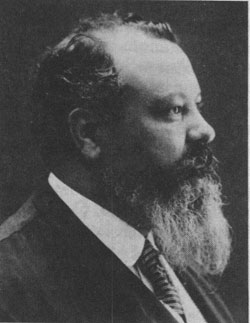
Thus, the modern Martinist current must be understood not as an origin, nor as the sole heir to this tradition, but as one of the later expressions of a more ancient initiatic whole, whose traces can also be found in high-degree Masonic systems and in operative manuscripts such as the Manuscript of Algiers.
In this perspective, this document appears less as an isolated text than as the testimony of a demanding spiritual discipline, oriented toward the rectification of the being, and situated within an initiatic context in which the present-day distinctions between Freemasonry, Martinism, and the so-called “Egyptian” rites were not yet clearly separated.
A Text of Transition, Between Structure and Transmission
The Manuscript of Algiers appears at a particular moment in the life of Martinès de Pasqually. He was then leaving France to join Saint-Domingue, carrying with him a work still in the process of transmission. This period was marked by geographical dispersion, but also by doctrinal concentration.
The manuscript does not constitute a completed treatise. It brings together fragments, letters, and instructions intended for disciples already engaged on the path. This fragmentary form is not a defect: it corresponds to the very nature of initiatic transmission, which is never given all at once.
This is why the Manuscript of Algiers must be understood as a threshold text. It stands: between oral teaching and written instruction, between ritual practice and inner transformation, between the structure of the Order and the personal responsibility of the operator.
It does not seek to explain the world, but to prepare man.
The Primacy of Being over Action
One of the most consistent teachings of the manuscript concerns the relationship between the operation and the inner state of the operator. The text emphasizes a simple yet radical idea: spiritual action has value only if it proceeds from a transformed being.
One thus finds repeated warnings against the temptation to act without preparation: to act without necessity, to act without authority, to act without discernment. These cautions do not stem from ordinary moral prudence. They express a spiritual law: he who acts outside the order acts against the order.
For Martinès, rites are not magical instruments. They are visible forms of an invisible reality. The circle traced in space is only an image of the inner center. The spoken word is effective only if it corresponds to a just intention. The ritual gesture produces nothing by itself.
Thus, the manuscript overturns a common illusion: it is not the rite that transforms man, but the transformed man who gives meaning to the rite.
Purification as the Condition of All Operation
The Manuscript of Algiers strongly emphasizes the necessity of prior purification.
This purification is not limited to an ascetic practice or to a moral discipline. It concerns the whole being. Three fundamental requirements are constantly recalled:
- purity,
- legitimacy,
- rectitude of intention
These three conditions form the foundation of any authentic operation.
Without them, action becomes not only ineffective, but dangerous. The manuscript explicitly evokes the risk of spiritual illusion: the operator may believe he is acting in the light while he remains in error.
This danger is not imaginary. It arises precisely when man seeks phenomena rather than inner transformation. The purification required is therefore not a technical preparation. It is a conversion of the gaze, a putting into order of the being, a restoration of inner balance.
In other words: the operation begins before the rite.
Order as the Central Principle
At the heart of the Manuscript of Algiers lies a fundamental notion: that of order. Order is not merely an external rule or a collective discipline. It designates an invisible structure that connects man to a spiritual hierarchy. To act within order means: to conform to a higher law, to respect a measure, to acknowledge an authority.
That is to say, legitimacy is not an administrative formality. It corresponds to a real position within a spiritual economy. Man does not command because he decides to do so. He commands because he is situated in his rightful place.
This conception of order sheds deep light on the pedagogy of Martinès de Pasqually. It explains why the manuscript places such emphasis on patience, discernment, and prudence. True authority is not conquered. It is received.
From the External Gesture to the Inner State: An Initiatic Continuity
The Manuscript of Algiers does not oppose ritual action to inner transformation. It connects them. In it, rites appear as supports, not as ends. They make visible a reality that must first be lived inwardly.
This logic profoundly shaped the initiatic traditions that followed. It can be found in particular in the paths that chose to interiorize theurgical practice rather than to multiply it. In these traditions, the emphasis shifts: from gesture to intention, from phenomenon to state, from action to presence.
This shift does not constitute a rupture. It represents a maturation. The Manuscript of Algiers thus appears as a bridge between two moments of the tradition: that of operation and that of interiorization.
Conclusion
The Manuscript of Algiers remains a demanding text, often misunderstood because it escapes the usual categories. It is neither a theological treatise, nor a ritual manual, nor a simple correspondence. It is a text of formation.
It reminds us that true transformation does not begin in the rite, but in man. It teaches that spiritual action cannot be separated from the inner state. It finally affirms that order is not an external constraint, but a harmony to be rediscovered.
In an age when rapid methods or spectacular experiences are sometimes sought, this manuscript proposes a more discreet and more demanding path: that of patience, rectitude, and inner work. It is perhaps there that its most contemporary lesson lies.
For the true operation is never external. It always begins in the heart of man.
To go further
- Martinès de Pasqually, Treatise on the Reintegration of Beings. Major doctrinal text attributed to Martinès de Pasqually.
- Georges Courts, The Great Manuscript of Algiers
- Louis-Claude de Saint-Martin, The Man of Desire
- Robert Amadou, The Lyon Lessons to the Élus Coëns
The above references are provided for informational and cultural purposes only. There is no commercial relationship with the authors, publishers, or platforms mentioned; these links are not advertisements, but rather further reading intended to provide more in-depth information on the subject matter.
Where possible, the images used to illustrate these articles are systematically accompanied by a reference to their source and credits. Where no source is indicated, this is because the information was not available. These images are used solely for illustrative purposes, in a non-profit context, without any commercial intent or appropriation of the work.