

The Origins and Continuity of the Rite
The Ancient and Primitive Rite of Memphis-Misraïm did not arise in isolation. It is heir to several Masonic and initiatic currents which, between the eighteenth and nineteenth centuries, sought in Egypt, Hermeticism and the traditions of Western esotericism a language through which to deepen the inner work.
This history is neither that of an unbroken transmission preserved unchanged since Antiquity, nor that of a single organisation that passed through the centuries without interruption. It is a history of successive experiments, claimed lineages, breaks and reconstructions. Through this process, the Rites of Misraïm and Memphis gradually took shape, followed in time by the Ancient and Primitive Rite of Memphis-Misraïm.
The Earliest Forms of So-Called “Egyptian” Freemasonry
During the eighteenth century, Europe witnessed the proliferation of higher-degree systems and initiatic societies drawing upon Hermeticism, alchemy, Kabbalah, accounts of the ancient Mysteries and the symbolic image of Egypt.
The Primitive Rite of the Philadelphes of Narbonne, organised around 1779-1780; the Philalèthes gathered within the Paris lodge Les Amis Réunis; the African Architects; and various systems inspired by Hermetic thought all bear witness to this quest. These organisations were not necessarily the direct ancestors of Memphis-Misraïm. Rather, they belonged to the intellectual and initiatic environment within which the later Egyptian Rites could emerge.

Naples also holds an important place in this history. In the circle surrounding Raimondo di Sangro, Prince of San Severo, a form of Freemasonry characterised by a strong esoteric culture developed during the mid-eighteenth century. Its influence upon later Rites should not be presented as a proven line of descent, but the Neapolitan milieu unquestionably formed part of the spiritual and cultural world in which several so-called Egyptian Masonic traditions would take root.
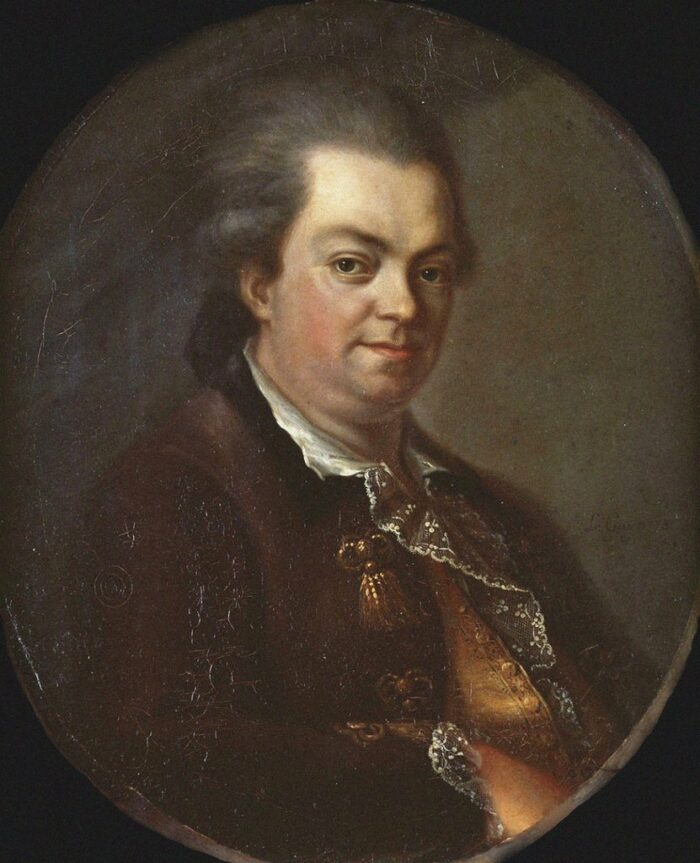
During the 1770s and 1780s, Joseph Balsamo, better known as Cagliostro, gave particularly celebrated expression to this aspiration through his Egyptian High Masonry. His system combined initiation, spiritual regeneration, theurgy and Egyptian symbolism. It did not give rise to an enduring organisation directly identifiable with Memphis-Misraïm, but Cagliostro remains one of the great precursors of Egyptian Freemasonry and one of its foundational figures in spiritual and symbolic terms.

The Turning Point of the Egyptian Campaign
The French campaign in Egypt in 1798 did not create Egyptian Freemasonry: several systems inspired by Egypt predated it. It did, however, mark a decisive cultural turning point.
The scholarly work undertaken during the campaign, followed by the publication of the monumental Description de l’Égypte, profoundly renewed European knowledge and perceptions of ancient Egypt. Its monuments, hieroglyphs and deities became the vehicles of an Egypt that was both better understood and still invested with immense symbolic power.
For the Egyptian Masonic Rites of the nineteenth century, the aim was not to reconstruct an ancient cult in every detail. Egypt became the language of an initiatic quest concerned with origins, self-knowledge, death and rebirth, and humanity’s relationship with the sacred.
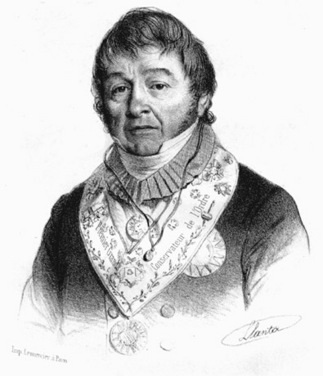
Misraïm: The First Structured System
The Rite of Misraïm appears in the documentary record at the beginning of the nineteenth century. Its presence in Italy is attested from 1811 onwards, although the precise circumstances of its formation before its establishment in France remain imperfectly understood.
The brothers Marc, Michel and Joseph Bédarride played a decisive part in its development in France from 1814-1815. They organised a system of ninety degrees, bringing together numerous degrees already in circulation and adding teachings and terminal degrees strongly marked by Hermeticism.
Misraïm did possess the symbolic degrees of Entered Apprentice, Fellow Craft and Master Mason. The earliest rituals presently known, including a manuscript held by the Bibliothèque municipale de Toulouse and dating from approximately 1821-1822, nevertheless show that these Craft degrees remained very close to the French and Scottish Masonic workings of their time. The system’s more specifically Egyptian character was then expressed chiefly in its higher degrees and in the overall structure of the Rite.
During the nineteenth century, the Rite experienced periods of growth, prohibition, dormancy and revival. Its course was eventful, but it established within French Freemasonry the lasting idea of an organised Egyptian initiatic system.

Memphis: A New Masonic System
The Rite of Memphis was organised in France by Jacques-Étienne Marconis de Nègre in 1838, following his separation from Misraïm. In 1839, in L’Hiérophante, he published the first elements of his system together with its symbolic rituals.
In the first three degrees, the Memphis texts remained very close to those of Misraïm and to the Masonic sources common to both systems. The originality of Memphis was expressed principally in the architecture of its higher degrees, the place it gave to the initiatic traditions of Antiquity, and the manner in which Marconis brought together Hermetic, chivalric, biblical and Orientalising elements.
Memphis experienced a difficult existence in France, with alternating periods of dormancy and revival, but it also spread beyond France, notably to Egypt, Great Britain and the United States. In 1862, Marconis placed the Memphis degrees worked within his French jurisdiction under the authority of the Grand Orient de France. The Rite nevertheless continued within several lineages abroad.

The Rapprochement between Memphis and Misraïm
Throughout much of the nineteenth century, Memphis and Misraïm remained distinct systems, even though they shared many degrees, references and initiatic aims.
In 1881, several governing bodies of the two Rites, then engaged in an international rapprochement, recognised Giuseppe Garibaldi as Grand Hierophant General. This union carried considerable symbolic and jurisdictional importance. It did not, however, immediately remove every difference between the various organisations, degree systems and national workings.
Garibaldi thus became the emblematic figure of the convergence between Memphis and Misraïm. After his death, the Rite continued to be transmitted through various jurisdictions, particularly through the international networks associated with John Yarker, Theodor Reuss and their Continental correspondents.

Papus and the Return to France
At the turn of the twentieth century, Gérard Encausse, known as Papus, played a major part in the return to France of a form of Freemasonry explicitly directed towards occultism, Martinism and the Hermetic traditions.
The Egyptian higher degrees were not yet everywhere associated with a uniform system possessing Craft lodges of its own. They could rest upon symbolic lodges working other systems. The lodge Humanidad, associated with Papus and Téder, worked under the Spanish National Rite. The surviving documents do not allow us to claim that a single Egyptian Craft ritual was worked continuously throughout all these bodies.
This was therefore less a period of ritual stability than one of gradual reorganisation. Warrants, rituals and teachings circulated between several countries and initiatic circles. These networks kept alive the idea of an Egyptian Freemasonry whose particular vocation was to explore the occult and transcendent dimension of the Masonic tradition.

Jean Bricaud
After Papus and Téder, Jean Bricaud gave the Rite a more clearly defined institutional and doctrinal framework. An heir to the occultist milieu of Lyon and a patriarch of the Gnostic Church, he firmly placed Memphis-Misraïm within a spiritual environment in which Hermeticism, Gnosis, Martinism and esoteric Christianity could meet.
His influence should not be confused with a complete revision of the three Craft degrees, for which the surviving documents provide no evidence. It was expressed above all in the intellectual orientation of the Rite, its institutions, his writings and some of its higher degrees.
Regarding the demanding nature of this path, he summarized—at the beginning of the 20th century—the spirit that animates Memphis-Misraïm. This statement does not close the door; it simply serves as a reminder of the nature of the work required:
It is easy to understand that the Memphis-Misraïm Rite is only suitable for a very small number of individuals. They are generally recruited from among students of Occultism and Hermeticism... eager to trace the real origins of our institutions and study the occult and transcendent aspects of Freemasonry.
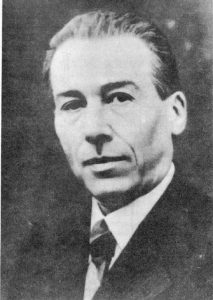
Constant Chevillon
Constant Chevillon continued this work under increasingly difficult historical circumstances. Surviving archival material still bears witness to comparatively restrained symbolic workings, in some respects close to established Craft practice. Masonic work for women was also developed under his authority. His murder by the French Milice in 1944 dealt the Rite an extremely severe blow.
After the war, Henri-Charles Dupont maintained the transmission during a period of great fragility. In 1960, he passed the succession to Robert Ambelain.

Robert Ambelain: The Great Ritual Reconstruction
Robert Ambelain played a decisive part in the reorganisation and dissemination of the Rite after the Second World War. As a writer and practitioner of Western esotericism, he set about giving the ritual corpus greater unity and a more clearly defined Egyptian identity.
His work was not simply the restoration of an ancient ritual preserved unchanged. Ambelain undertook a genuine reconstruction, drawing upon several traditions: the earlier rituals of Misraïm and Memphis, the Rectified Scottish Rite, Martinezist currents, Rosicrucian traditions, Gnosis and ceremonial esotericism.
The new symbolic rituals were adopted by the General Convent of 1965 and subsequently published in 1966 and 1967 under the title Cérémonies et rituels de la maçonnerie symbolique. Through them, the first three degrees received, within this French branch, a much more structured Egyptian, Hermetic and operative expression.
Ambelain did not, therefore, create the Craft degrees of Memphis-Misraïm: these had existed since the nineteenth century. He did, however, give them a new, coherent and strongly distinctive form that would profoundly influence the contemporary working of the Rite.
His work also contributed to the institutional revival of Memphis-Misraïm and to the development of its male and female Masonic bodies. In 1966, a women’s Grand Lodge of Memphis-Misraïm was established within his worldwide jurisdiction under the leadership of a Grand Mistress.

From Gérard Kloppel’s Succession to the Present Form
In 1985, Robert Ambelain passed the succession to Gérard Kloppel. Under Kloppel’s leadership, the Rite formally opened its Masonic work to both women and men in 1996. This development was consolidated at the Mixed National Council held in Nîmes in 2000, which led to the establishment of a mixed-gender Sovereign Sanctuary.
The present form of the Grande Loge Unie de Memphis-Misraïm arose from this development. Today, it brings women and men together within a shared Gnostic and Hermetic initiatic path, committed both to the transmission of the Rite and to freedom in the pursuit of inner work.
A Living Tradition
The history of Memphis-Misraïm is not that of an institution that has remained unchanged. It is a history of transmissions, breaks, revivals and reconstructions. Its continuity does not lie in the absolute identity of all its successive forms, but in the persistence of a single aspiration: to make Freemasonry a path of knowledge, inner transformation and a conscious relationship with the sacred.
The account presented here does not claim to exhaust the history of the Rite. It offers a guiding thread intended to place the tradition we have received and work today within its historical setting. Where the documentary record establishes a fact, we must take account of it; where uncertainty remains, this does not diminish the initiatic significance of the Rite. It simply reminds us that tradition is a living reality, transmitted by women and men entrusted with preserving it, questioning it and enabling its work to continue.