
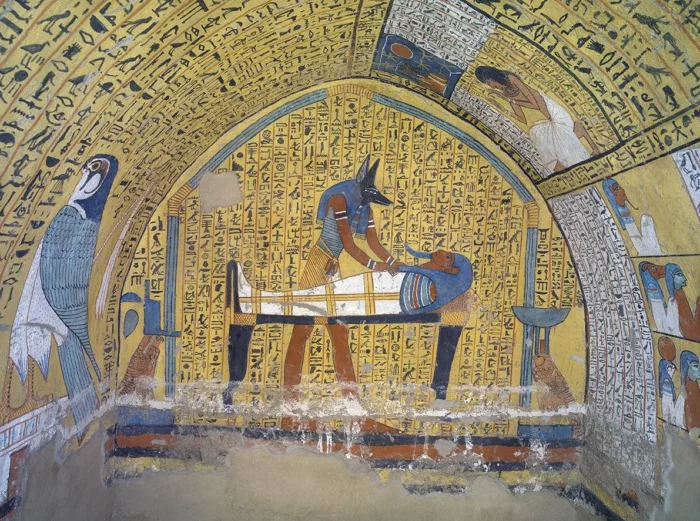
A book that was not called “Book of the Dead”
For more than a century, the West has referred to a set of funerary texts from ancient Egypt as the “Book of the Dead”. However, this name is late and does not correspond to the original title of the work. The ancient Egyptians spoke instead of the “Book of Exiting into the Daylight”, sometimes also translated as the “Book of Exiting into the Light of Day”. An essential nuance, it profoundly changes our way of understanding this text.
Because this text does not only talk about death. He is talking about a passage.
The same observation could also be made about the famous “Tibetan Book of the Dead”, also designated by a Western title well after its writing. In both cases, these texts were less intended to describe death than to accompany a consciousness in a journey: that of one state to another.
For the ancient Egyptians, death was not a permanent disappearance, but a stage. The soul had to learn to pass through doors, go through trials, recognize the forces that led it astray, then present itself before the scales of Maat so that its heart could be weighed. Thus, what we call today the “Book of the Dead” appears less like a funerary manual than like an initiatory guide intended to prepare the being to face their own truth.
And perhaps this is the paradox of these ancient texts: written for the dead, they seem above all to speak to the living.
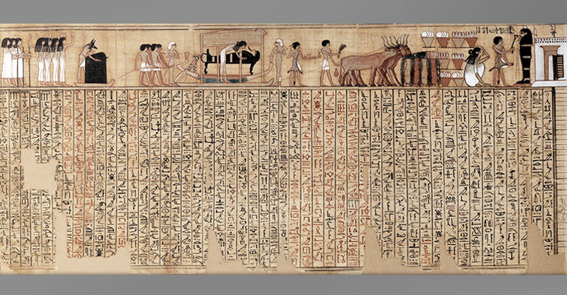
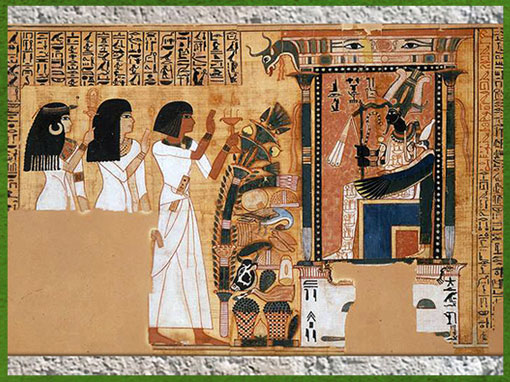
Funerary papyrus of the scribe Nebqed, Book to Come Out to Daylight – (Marsailly/Blogostelle)
A unique book for each deceased
After the funeral rites and embalming, the body of the deceased was placed in his tomb with the objects intended to accompany him in the afterlife. Among them was sometimes a long roll of papyrus covered with prayers, formulas and symbolic representations: the Book for Coming Out to Daylight. That is to say that what we call the book of the dead is not a unique and immutable text, it was adapted and personalized for each deceased.
These manuscripts could take months of work. They were copied by hand, illustrated, adapted to their future owner, then placed near the mummy before the tomb was closed. For the ancient Egyptians, it was not a simple religious text. This book was really meant to accompany the deceased in what awaited them after death.
This attention given to the posthumous journey reveals an essential idea of Egyptian thought: the destiny of the soul also depends on what it became during its earthly existence. The passage to the afterlife is not based only on rites, but also on a form of inner balance.
This is undoubtedly why the weighing of the heart occupies such a central place. The judgment is neither on power, nor on wealth, nor even on the knowledge accumulated over a lifetime, but on what the being really carries within itself.
As we progress through the Book of the Dead, the text ceases to appear as a simple funerary story. It also becomes a meditation on conscience, memory and human responsibility.
And this is perhaps what explains why these texts still continue to touch us today. Behind the symbols of ancient Egypt, they pose a question that has remained intact throughout the centuries: what remains of a man when everything else disappears?
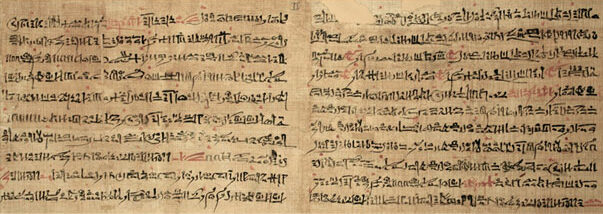
Learn to die to access another light
For the ancient Egyptians, death was not a brutal end but the beginning of a journey. The deceased left the visible world to enter Amenti, this intermediate territory described by funerary texts as an uncertain space, populated by guardians, doors and trials.
Nothing was simple there. It was necessary to move forward without allowing oneself to be deceived, to recognize the passages, to answer the questions asked by certain powers and to continue one's journey despite the traps or the hostile forces which threatened the soul with confusion and wandering.
It is precisely for this reason that the Book to come out into the light was placed in the tomb next to the mummy. Its formulas were to help the deceased cross this dangerous universe without losing their orientation. The text served as both protection, guide and memory aid for those entering the unknown.
In this crossing, one of the great spiritual intuitions of ancient Egypt already appears: dying was not enough to achieve immortality. The being still had to go through trials, confront what he carried within himself and reach the hall of judgment.
The deceased, however, did not move forward alone. Egyptian depictions often show Anubis, the jackal-headed god, leading the dead through the dark regions of Amenti. Guardian of funeral rites and guide of passages, he accompanies the soul until the decisive moment of weighing the heart.
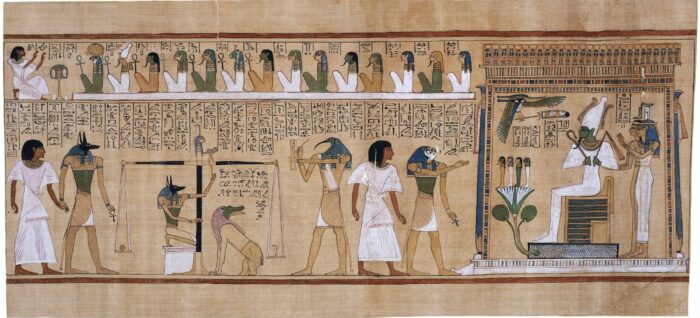
The judgment of the heart
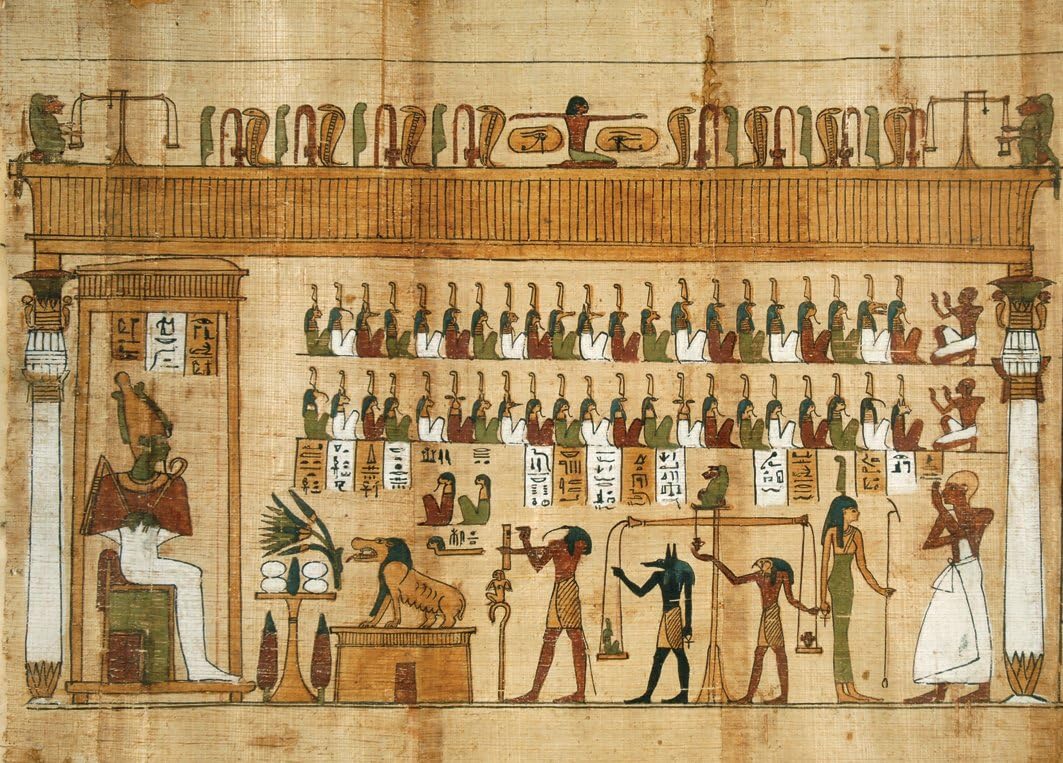
At the end of his crossing, the deceased finally arrived in front of the judgment room. This is where the decisive test awaited him: the weighing of the heart.
For the ancient Egyptians, the heart preserved the entire trace of existence. Thoughts, actions, hidden faults, violence committed, but also righteous gestures and true words. Nothing was completely erased.
This idea was so strong that some texts evoke the deceased's fear of seeing his own heart testify against him at the time of judgment. Because one could deceive men, sometimes even deceive oneself, but deep down there remained a memory that was impossible to silence.
Anubis then placed the heart on one of the scales, while on the other rested the feather of Maat, symbol of truth, justice and cosmic order. If the heart turned out to be heavier than the feather, loaded with lies, violence or inner disorder, the deceased could not continue his journey. But if the balance remained intact, he became “right of voice” and accessed the kingdom of the blessed.
This scene has a symbolic power that goes far beyond the funeral framework. Because it evokes an intuition that we find in many spiritual traditions: human beings always end up being confronted with what they really are.
The negative confession
Faced with the forty-two divine judges, the deceased not only had to present his heart to the scales of Maat. He also had to proclaim what Egyptologists today call the “negative confession”.
“I didn’t kill. I didn't steal. I didn't lie. I didn't cause any pain."
Through this long litany, the deceased listed the faults that he claimed not to have committed during his earthly existence. It was not just a ritual or a magic formula intended to deceive the gods. This confession also outlined, implicitly, a certain idea of the just m
Egyptian thought did not completely separate spiritual destiny from human conduct. Access to immortality presupposed a form of inner balance, but also an ability to remain faithful to Maat, that is to say, to truth, justice and the order of the world.
Several authors have also noticed the disturbing similarities between certain passages of this negative confession and the moral principles that we will find later in the Biblical Decalogue. Whether it is a direct influence, a diffuse cultural heritage or a simple spiritual kinship, these correspondences remind us of the extent to which certain human questions cross civilizations without ever disappearing.
An initiation to inner transformation
In the Book of the Dead, nothing is ever completely certain. The deceased advances in an unstable world, crossed by traps, guardians and hostile forces. He must pass through doors, answer questions asked of him, recognize secret names and continue on his way without being consumed by confusion.
Some texts speak of forty-two doors guarded by formidable powers. Others speak of creatures ready to swallow up those who no longer know how to respond or who lose their way. Knowledge alone is not enough. We still have to remain able to remember.
This is undoubtedly one of the most disturbing ideas in the Book to come out into the light: the soul must maintain a form of lucidity in the very heart of the ordeal. The formulas written on the papyrus then become much more than funeral prayers. They serve as a memory aid for a consciousness called to cross the unknown without losing its orientation.
This importance given to memory appears even in the symbolism of the heart. As seen above, the Egyptians feared that he could testify against the deceased at the time of judgment.
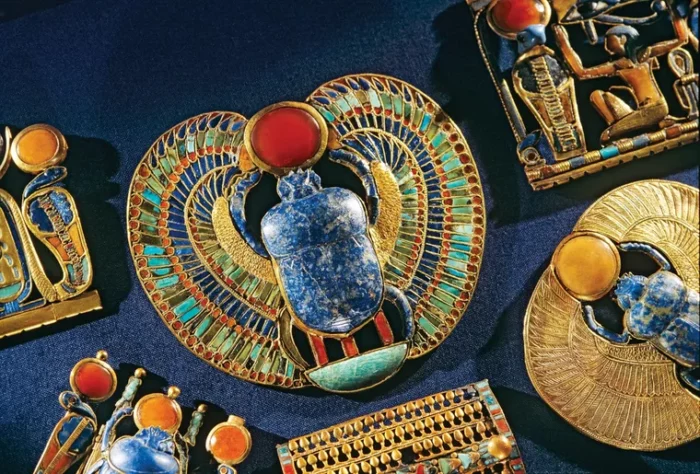
This is also why the Khepri scarab was often placed on the mummy's chest. Associated with the rising sun, it symbolized rebirth, but also served as protection at times of weighing the heart. As if man needed, even in death, a silent reminder of his own possibility of rebirth.
Even the ritual of “opening the mouth” seems to go in this direction. The deceased symbolically regains speech, breath, sight and hearing. He becomes able to perceive again. Able to move forward.
Under its funerary appearance, the Book of the Dead perhaps describes less a world populated by gods than an inner journey where human beings must learn, step by step, to cross the darkness without forgetting the light.
Conclusion — A book for the living
Thousands of years later, these texts continue to speak to the living.
Moderns have retained the name “Book of the Dead”. The ancient Egyptians spoke rather of a Book to come to light. Perhaps because beyond the funeral rites and symbols, these texts do not only speak of death, but of this fragile part of the human being which seeks, in the heart of darkness, not to lose the way to itself.
Perhaps deep down, the Book to come to light did not only seek to teach men how to die, but how to live justly.
“To learn is to learn to die,” said Plato. The ancient Egyptians might have added: learning to die is learning to live according to Maat.
To go further
- Ani Papyrus – British Museum. One of the most famous copies of the Egyptian Book of the Dead kept in the British Museum.
- The Egyptian Book of the Dead – The Oriental Institute Chicago. Educational and iconographic presentation around the Book of the Dead and its symbols.
- Maat in the Encyclopædia Universalis. Article devoted to the principle of truth, justice and balance in Egyptian thought.
- The Hunefer Papyrus – British Museum. Famous scene of the weighing of the heart before Osiris and the divine judges.
The above references are provided for informational and cultural purposes only. There is no commercial relationship with the authors, publishers, or platforms mentioned; these links are not advertisements, but rather further reading intended to provide more in-depth information on the subject matter.
Where possible, the images used to illustrate these articles are systematically accompanied by a reference to their source and credits. Where no source is indicated, this is because the information was not available. These images are used solely for illustrative purposes, in a non-profit context, without any commercial intent or appropriation of the work.