
Introduction
Published in the early 2000s, The New Hermetics by Jason Augustus Newcomb is no longer a new release. The book is now over twenty years old. And yet it continues to circulate, to be discussed, to be rediscovered, as if the question it raised at the time had lost none of its relevance.
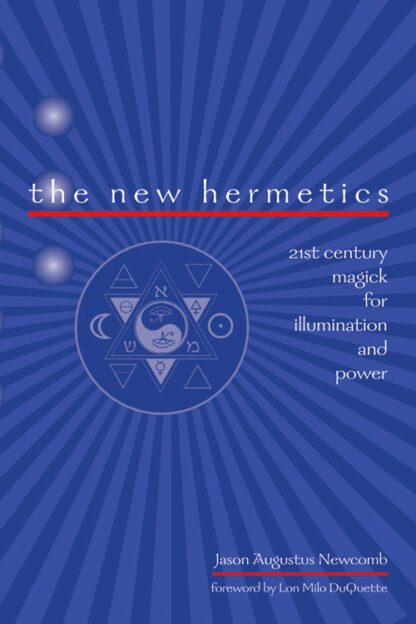
This gap deserves attention. The New Hermetics was born at a pivotal moment: when cognitive science, modern psychology, and contemporary practices of consciousness were beginning to offer a new language for describing inner experience. The author’s ambition was not to restore an ancient initiatory tradition, but to reformulate—using the tools of his time—intuitions inherited from Hermeticism.
To reread this work today is therefore not to follow a recent fashion, but to examine a lasting symptom: the modern attempt to reconstruct, through scientific or psychological pathways, a relationship to consciousness and to the world whose essential dimension has in part been lost. In this sense, The New Hermetics acts less as a novelty than as a revelation.
Hermeticism: A Knowledge That Does Not Accumulate
The Hermetic tradition, as we know it through its texts and modern syntheses—think, for example, of Kybalion— does not transmit knowledge in the academic sense of the term. It offers a framework for reading realitygrounded in a few principles that are simple in appearance, yet demanding in their application: the unity of the world, correspondence between planes, the primacy of spirit, inner transformation.
This kind of knowledge has a particular feature: it does not accumulate. It does not progress by adding data, but by embodiment. When it ceases to be practised, it does not become obsolete: it is lost. Not because it is false, but because it requires an inner stance that each era must reconquer.
What Modernity Has Gained—and What It Has Left Behind
Contemporary sciences of consciousness have produced undeniable advances. We understand better today the brain’s plasticity, the role of attention, the perceptual construction of reality, the impact of mental representations on behaviour. These discoveries describe with precision mechanisms that earlier ages expressed in symbolic form.
But this precision comes at a cost. By separating the study of consciousness from any demand for inner transformation, modernity has often uncoupled knowledge from responsibility. Today one can understand without changing, analyse without rectifying oneself, observe without committing. Hermeticism, by contrast, never dissociates these dimensions. To know implies becoming other than one was.
The New Hermetics : Reconnecting What Has Been Separated
This is where Newcomb’s book becomes interesting. The New Hermetics does not claim to restore a vanished initiatory tradition. Rather, it seeks to rebuild an operative language for experiences of consciousness that our era is rediscovering without always knowing how to situate them.
The “levels of instruction” proposed by the author, his way of speaking about visualisation, intention, and mental transformation, can at times resemble contemporary personal development. But behind this vocabulary lies a deeper intuition: certain fundamental human experiences have not disappeared; it is their symbolic framework that has faded.
The book thus attempts to reconnect will, imagination and action—a central triad of every Hermetic tradition—using the concepts available today.

A Revealing Limit
This attempt at translation is not without risk. In seeking to make Hermeticism immediately accessible, one may soften its vertical dimension, turning it into a method among others, detached from any demand for transmission or prolonged inner discipline.
The use of personal-development codes, typical of contemporary “new-age” sensibilities, is not accidental here: it signals the contemporary difficulty of transmitting Hermetic thought without reducing it to a method of individual optimisation.
But this limit is also revealing of our time. It shows how deeply we feel the losseven when we no longer have the words for it. The New Hermetics is not a substitute for traditional texts; it is the symptom of a lack—and in that sense, it deserves attention.
Why This Book Concerns Us
For a attentive Grand Lodge committed to the continuity of Hermetic knowledge, this book acts like a mirror. It shows what becomes of a tradition when its initiatory forms disappear, while its fundamental intuitions continue to work within the human mind.
The point is not to modernise Hermeticism, nor to sacralise the past. It is to recognise that not everything is transmitted automaticallyand that certain losses are not compensated by technical progress.
Hermeticism recalls one essential thing: the world does not change lastingly without inner transformation. This demand has lost none of its relevance.
A Word on Language
To this day, twenty years on, The New Hermetics has still not been translated into French. The book therefore addresses readers who are comfortable with English. In a way, this gives it an additional charm: that of a double Hermeticism, both doctrinal and linguistic. After all, to understand Hermes always requires crossing a frontier—whether symbolic or grammatical.
Conclusion
The New Hermetics is neither a classic treatise nor a mere contemporary essay. It occupies that in-between so characteristic of our time: a humanity that is technologically advanced yet symbolically impoverished, seeking to reformulate what it has allowed to slip away.
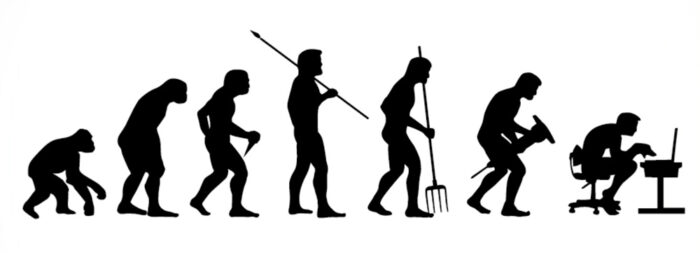
In this sense, the book should not be read as a definitive answer, but as an indication. It suggests that something persists, despite shifts in language and paradigm: the ever-renewed necessity of placing the human being back in his proper place within the order of the world.
To go further
- Jason Augustus Newcomb, The New Hermetics: 21st Century Magick for Illumination and Power, Weiser Books (2004) – Ouvrage en anglais.
- Antoine Faivre, Accès de l’ésotérisme occidental, Gallimard
- Serge Hutin, L’Alchimie, PUF – Que sais-je ?
The above references are provided for informational and cultural purposes only. There is no commercial relationship with the authors, publishers, or platforms mentioned; these links are not advertisements, but rather further reading intended to provide more in-depth information on the subject matter.
Where possible, the images used to illustrate these articles are systematically accompanied by a reference to their source and credits. Where no source is indicated, this is because the information was not available. These images are used solely for illustrative purposes, in a non-profit context, without any commercial intent or appropriation of the work.